Wednesday, July 06, 2016
Huckleberry
As many of you know, Sebastian and Hero's big, long-haired black cat was inspired by my own inimitable Huckleberry.
Huckleberry came to us as a tiny kitten just months after we moved to the States. Big, beautiful, smart, vain, and highly intolerant of most other cats, he was never demonstrative (you were allowed to hold him--only like a baby--for perhaps two minutes, then he'd had enough). But he was always, always, intensely affectionate, and he pined miserably whenever I left him, even for a few days. He followed me around the house all day, sleeping in the To Be Filed basket under my desk or in the special box I kept just for him under the coffee table near where I sit to write my books in longhand. He went with me up to the lake on my weeklong writing retreats--an excursion he always loved because he got to be an only cat. At night he slept on a dolls' bunkbed at the foot of my bed--Huck on the top bunk, Thomasina (his foster mom, adopted as a two-year-old rescue at the same time) on the bottom.
I love all my cats, but Huck was my special baby. He was at my side (meowing) through all the heartache and horror of Katrina and its aftermath. He comforted me when my mother died and when my girls spread their wings and flew. Three years ago I almost lost him to a flare of what we discovered was chronic toxoplasmosis (most cats are able to wall it off; Huck couldn't, and I learned it had killed his mother at age 8). I knew it would only be a matter of time before it flared again. I strongly suspect his grief over Thomasina's death six weeks ago sent his immune system into a tailspin that left him vulnerable.
Yesterday, I had to thank my darling for all the joy and love, laughter and sweet, sweet memories he brought into my life, and said goodbye. He has left a giant hole in my heart and in my life, and I am frankly devastated.
Saturday, June 18, 2016
Progress
I've spent the last week going over the copyedited manuscript of WHERE THE DEAD LIE. Once upon a time I would get my original paper manuscript back with the copyeditor's marks on it. Now it's all done electronically with Track Changes. I liked the old way much better. Now I have to sit in front of the computer for hours and hours going through each of the copyeditor's little bubbles. Then I make a duplicate of the file, leave in all the changes but take out the bubbles, print out a clean manuscript, and go sit someplace comfortable and spend a couple of days reading it.
This is my last chance to make any changes. I will see the manuscript one more time before it is published, but at that stage I'll be reading galley proofs and the only things I'm allowed to change are typos or glaring mistakes (like calling a character by the wrong name).
I thought those of you who are not writers might be interested to see some of the copyedits (if you click on the images they will enlarge). I write fairly clean copy, although since my focus is always on story and flow, I can miss some dumb mistakes (like writing Eden when I meant Eton!). I always appreciate my copyeditors because they save me enormous embarrassment. I worry when I catch a dozen things after a copyeditor has already gone through a manuscript because I know that means some things are inevitably slipping past us. It's impossible for me to ignore story for words, so I'm a lousy proofreader. And then of course the copyeditors always change things I want put back the way they were.
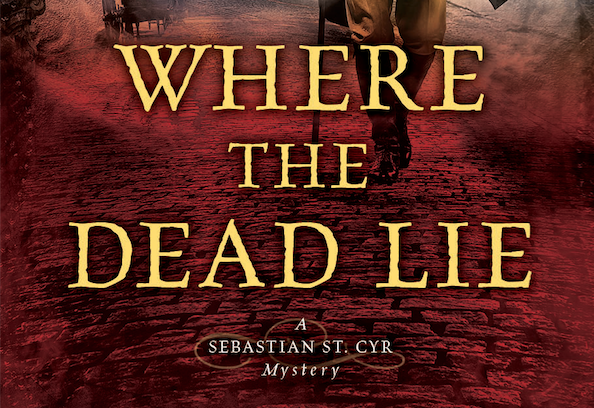
Also this week I received the first version of the cover. It needs some modification, and it will be a while before I have approval to show it, but I'm going to cheat and share this screenshot of part of it because it's so striking--and because it's always sooo exciting when a manuscript inches this much closer to being a real book:
This is my last chance to make any changes. I will see the manuscript one more time before it is published, but at that stage I'll be reading galley proofs and the only things I'm allowed to change are typos or glaring mistakes (like calling a character by the wrong name).
I thought those of you who are not writers might be interested to see some of the copyedits (if you click on the images they will enlarge). I write fairly clean copy, although since my focus is always on story and flow, I can miss some dumb mistakes (like writing Eden when I meant Eton!). I always appreciate my copyeditors because they save me enormous embarrassment. I worry when I catch a dozen things after a copyeditor has already gone through a manuscript because I know that means some things are inevitably slipping past us. It's impossible for me to ignore story for words, so I'm a lousy proofreader. And then of course the copyeditors always change things I want put back the way they were.
Also this week I received the first version of the cover. It needs some modification, and it will be a while before I have approval to show it, but I'm going to cheat and share this screenshot of part of it because it's so striking--and because it's always sooo exciting when a manuscript inches this much closer to being a real book:
Saturday, June 04, 2016
This and That
Sorry I've been MIA for a few weeks. I've been busy with that project I can't talk about yet and that doesn't have anything to do with Sebastian. But hopefully I'll be able stop just hinting and actually talk about it soon.
In Sebastian news, Recorded Books has bought the audio rights for the next three books in the series (#13-15). They have also finally caught up with the earlier books, which means that the first eleven in the series are now available in audio. The audio for #12, WHERE THE DEAD LIE, should be out at the same time as the print release next spring.
And now for something you're not going to want to hear: because I have a new editor and her schedule for March was already full, it looks like WHERE THE DEAD LIE will be pushed back to an April release. I'm still lobbying to keep my old March slot, but . . .
In the meanwhile, they've done the photo shoot for the cover of WHERE THE DEAD LIE, so I should be seeing the mockup of that soon. And I've recently hit page 100 of the first draft for #13, which has no title yet. The first 100 pages of a book are always the hardest for me, so it's a huge milestone and big relief when I finally get past that point. I do wish I had a title for it, though; I find it oddly unsettling when I don't.
I've also been working on a long post about the rumors that Queen Victoria was illegitimate. More on that later!
Monday, May 16, 2016
Saying Goodbye. Again.
We lost Thomasina today. Even when you know a dearly beloved friend has lived a long, good life, it's still hard.
Thomasina saw Danielle through all the painful adjustments involved moving to a strange new country, negotiating the American school system, and heading off to college and then graduate school. Last Wednesday, Danielle successfully defended her doctoral dissertation; on Thursday she accepted a position as assistant professor at a good university. And today, this.
Tuesday, May 03, 2016
Ten Things You Probably Didn’t Know about the Prince Regent’s Infamous Wife, Caroline, Princess of Wales
The Prince of Wales’s hatred for his wife is legendary. The young Caroline,
Princess of Wales, was a lively, good humored, impulsive, playful, stubborn,
and not always wise woman. In later life, after she left England, she grew
increasingly fat, eccentric, and outrageous. But those later years can combine
with the Regent’s well-recorded antipathy to create a false impression of the
woman who had the misfortune to marry this sulky, spoiled, self-indulgent,
narcissistic, vain, and breathtakingly selfish prince. So here are ten things
most people don’t know about Caroline, Princess of Wales:
1. Caroline was a gifted linguist. She is mocked because her
English always retained a heavy German accent, but she was fluent. In addition
to her native German, she was also fluent in Italian and French, and frequently
preferred to converse in French.
2. Caroline was a gifted and unusually proficient pianist. She continued lessons with masters well into her twenties, working with M. Fleischer eighteen hours a week up until the time she left Germany. In England she also studied the harp and took instruction from singing masters.
3. Caroline was artistic. Most young women of her class and age were taught watercolor. But Caroline continued to enjoy painting her entire life, and while in London she also took instruction in clay sculpture.
4. Like many young women of her age, Caroline received little formal education. But she developed a serious, enduring love affair with books, and spent her life reading classics, histories, and memoires in English, French, and German. She was particularly fond of Shakespeare. The diaries and letters of people who met the Princess frequently mention that they spoke with her of books. In her later life she began a novel, which has been lost.
5. Prinny didn’t like Caroline’s looks, but in her youth she was actually considered attractive, with lovely skin and curly golden hair. The Prince preferred his women delicate (and older, interestingly), whereas Caroline was broad shouldered and plump. But the Prince’s contemporaries described her in their diaries and in letters to their spouses as pretty, with fine eyes, a lovely mouth, and good teeth. While it is less commonly noted, Caroline didn’t think much of the Prince’s looks, either. When they met and the Prince famously, loudly, and rudely said, “Harris, I am not well; pray get me a glass of brandy,” Caroline said to the same gentleman (later, and quietly), “Mon Dieu! Est-ce que le Prince est toujours comme cela? Je le trouve trรจs gros, et nullement aussi beau que son portrait.”
6. When the Prince’s envoy, Lord Malmesbury, first met Caroline in Brunswick, he described her as not as clean as she could be. But as they journeyed through Germany toward London, he took great pains to impress upon her the importance of cleanliness, and she did pay attention to him. No one ever remarked on her lack of cleanliness again. However, Caroline continued to have a tendency to scramble into her clothes, and she never did care too much about her appearance. In later life while living estranged from the Prince in Italy, her clothing choices were definitely eccentric (as was her behavior).
7. The Prince of Wales forced his bride to accept his well-known mistress, Lady Jersey, as one of her ladies in waiting, and actually sent Lady Jersey to meet Caroline when her ship docked in England. Not only did Lady Jersey deliberately arrive hours late with the carriages, she also attended the wedding and even dined with them on their wedding night. At one point the Prince gave Caroline a pearl bracelet, only to take it back a few days later and give it to Lady Jersey, who then delighted in wearing it around the Princess.
8. Prinny passed out drunk on their wedding night and did not, ahem, perform well. He always blamed Caroline.
9. Caroline did not have an illegitimate child in England. A charitable woman who loved children, the Princess did pay to foster some 8-10 poor children with farm families, and once took in a ten-month-old baby girl found abandoned on the heath. In the infamous “Delicate Investigation,” in which the Prince tried to accuse Caroline of adultery and treason so that he could divorce her, he paid an unscrupulous, heavily-indebted couple named Douglas to testify that the Princess had actually given birth to one of the children she took in, a boy named Willy Austin. In truth, Willy was adopted from an impoverished couple when his father lost his job; the child’s birth took place in a hospital and was recorded, and his mother had continued to visit him. Not only was the mother able to testify before the investigation, but many other of Lady Douglas’s statements were also proven to be false. Unfortunately, those who write about Caroline continue to give far too much credence to the patently ridiculous testimony given by Lady Douglas at that inquiry. (For her pains, the Prince paid Lady Douglas 200 pounds a year for life.)
10. Caroline loved to travel and in later life was able to visit many of the sites she had read so much about. After she escaped the Prince and England, she traveled throughout Germany, Italy, and Switzerland, as well as Tunisia, Greece, Turkey, and Palestine. Her behavior on those journeys might have been precisely calculated to embarrass the Prince Regent—and perhaps it was. He earned it.

Subscribe to:
Posts (Atom)