Showing posts with label Katrina. Show all posts

Friday, August 28, 2015

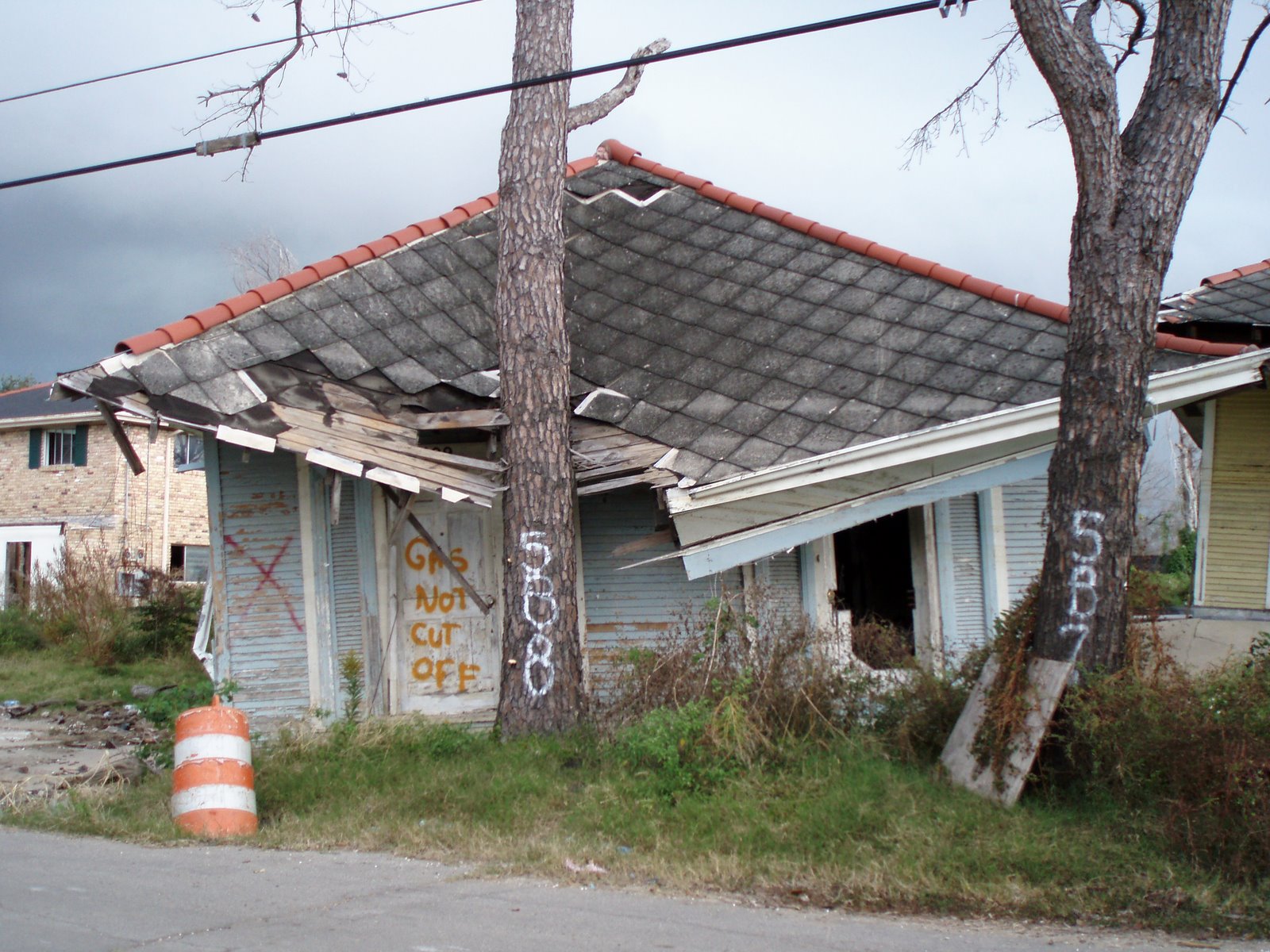
Katrina Plus Ten

A different kind of then and now: Dani gutting my office after Katrina, and the same corner, today, at the end of the post.

After ten years, Katrina has slowly become, for me, a kaleidoscope of indelible memories and jumbled emotions: Watching the first feeder bands of the hurricane sweep across the lake as we try to evacuate (my mother kept refusing to leave) and realizing that, yes, we really are about to get walloped. Huddling in the dark in my older daughter's tiny one-bedroom student apartment in Baton Rouge (five people, five unhappy cats, no power) and listening to sketchy news on a scratchy transistor radio. Reading the hysterical text messages (phone calls were impossible for about a year) sent by one of my daughter's  friends who did not evacuate and ended up on her roof watching in terror as the water rose, and rose, and rose. (How does a 15-year-old get over something like that?) Hearing some idiot reporter announce that everything between the I10 and the lake in Kenner is under ten feet of water, and throwing up (my house is by the lake in Kenner, and I'd had to leave my Press Cat behind because he wouldn't let me catch him).


But for me, the most powerful memories are actually those from the days after the storm: waiting anxiously at 3 am in a moonlit sugarcane field at the parish line one week later, when authorities finally allow us back in. Getting lost when we drive into the city because everything is such an unrecognizable horror. Seeing soldiers with machine guns standing on once-familiar streets. Driving up to our house, hoping maybe, somehow, it will be all right, and then that moment of raw despair when I realize it isn't. The soaring joy of finding Press Cat scared and unhappy but alive, alive, alive.


I could go on and on, but I won't. Neither New Orleans nor anyone who went through Katrina will ever be the same. Some of us are irreparably damaged, some of us learned valuable life lessons that will never be lost, and an untold number of us are dead. Ironically, there is no official counting of those who died. There isn't even agreement on who to count. The new trend is to count only those who drowned or had something like a tree fall on them (which is why the number has been going down), and not count those who died of heat stroke or a heart attack or some other medical emergency in the chaos and horror of the aftermath. We have no wall engraved with the names of Katrina's dead, although recent efforts at a proper accounting suggest the actual number of direct and indirect deaths is somewhere around 3,500. I guess no one wants to remember the victims of government incompetence.


It seems odd to realize that at some point when I wasn't even looking, those days became, finally, the past. Yes, vast swaths of New Orleans are still a wasteland, but so much is vibrantly normal again. We have now been back in our house nine years and one month. Yet some tasks still haven't been finished, and just this past week I had to replace three doors that had been stressed by Katrina and finally rotted out. The timing struck me as ironic.

Come Saturday, Steve, Danielle, and I will go out to dinner, share a bottle of wine, and laugh about the days when we had to drive up to Baton Rouge for groceries and drinking water and gas; when the entire city reeked of mold; when Danielle had to drive down to Florida just to take her SAT, and start back to school in a building with buckled floors and not much of a roof (her school was actually the first in the city to reopen; if there'd been any health authorities, they wouldn't have allowed it, but Katrina got rid of them, too). We'll remember learning how to gut houses and bleach walls, and how much we laughed through it all. Because if Katrina taught us anything, it was this: that as long as you can keep laughing, you'll be all right.

Cheers, everyone.


Thursday, August 28, 2014

Katrina Plus Nine


Nine years is a long time. Sometimes I feel as if Katrina happened to someone else, and I suppose that in a sense it did. I’ll never again be the woman I was on August 28, 2005. (Yes, Katrina hit on the 29th, but for me the most painful anniversary is the day before, the day we packed up and fled our city; by the time midnight rolled around, we knew we were doomed.). That woman, the B. K. one, was more carefree, more naive. Less anxious. Certainly less skilled in how to rebuild a house and restore flooded furniture.


She didn’t know how to gut a house with a wrecking bar or hang and finish drywall. She didn’t know—really know—just how thin the veneer of civilization is,  how quickly so many things she once took for granted--food, gas, police, firemen--could be torn away. Can be torn away. She’d never sat at the bedside of a loved one dying in a hospital with boarded up windows and no laundry service. She’d never had to bury someone at a cemetery in a small town up the river because the family mausoleum was still under water. She’d never looked at mile after mile of destroyed houses for so long that they started looking normal.


Every year, we go through this. The anniversary rolls around, and we remember, and then we try to forget. Last year, we spent Katrina Plus Eight without power as yet another hurricane took aim at New Orleans and didn’t seem to want to go away. At least this year when we raise our glasses in remembrance, we’ll be able to see what we’re doing.


Cheers, everyone.
Sunday, February 23, 2014

The London of Sebastian St. Cyr: Maps of Old London

When it comes to the topography of early 19th century London, this tattered tome is my bible. Based on a survey by Richard Horwood from 1792-9, the map was updated by William Faden in 1813, which makes it perfect for the Sebastian St. Cyr series. It is beyond wonderful; not only does it show all the streets, lanes, courts and alleys, but it even shows individual buildings with street numbers! Unfortunately for those of us with aging eyes, Faden's originally larger map segments have been reduced for publication to pages that only are about 8" x 12", so these days I find myself reaching for a magnifying glass a lot.

When I first started What Angels Fear, I had yet to discover the London Topographical Society and had to make do with an 18th century map of London and the Greenwood map of 1827, which is on line here (that's a screenshot from the Greenwood map, above).


Although London in 1827 was amazingly different from London of 1811-13, I still use it sometimes because you can really zoom in on a location and print it out. (Once upon a time I had the entire map printed out and mounted on giant sections of foam board, but then this little thing called Katrina flooded my office, and that was the end of that.)

Also online is John Rocque's 1746 map of London, which is here. It's also available in book form from the same people who print the 1813 Regency map.

To give you an idea of the kind of detail these maps provide, here is Hyde Park corner from 1746, showing the turnpike, the Tiburn gallows, and the nearby spot where, the map tells us, "soldiers are shot."

I love these maps and spend hours pouring over them just for fun. Some of us are easily amused.

Thursday, August 29, 2013

Eight Years On

It was eight years ago this morning that Katrina slammed into New Orleans and the Gulf Coast, changing our city--changing us--forever. So much has happened in the past eight years that in some ways those horror-filled hours and days and months seem long, long ago. And yet...


I can still feel the gut-wrenching despair of opening my front door for the first time after the storm and seeing what the floodwaters had done to the inside of my home. Still vividly recall the anguish of sitting beside my dying aunt in an understaffed hospital with boarded-up, shattered windows and orange FEMA blankets (because their laundry service had been swept away). Still remember the endless, strained jokes about blue tarps and National Guardsmen with machine guns at the corner and driving up to Baton Rouge for groceries and water. And none of us will ever forget that inimitable stench of decay that clung to the city for months and months--and, in some places, years.


They tell us the city has now regained 75% of its pre-Katrina population. That means more than 25% of us never came home, because our population today includes many volunteers who came down here to help, fell in love with the place, and decided to stay. It also includes new Hispanic residents who came to work on the reconstruction and also stayed.


In many, many ways, New Orleans is "back," as they like to say, although the changes are there, and heartbreaking. Yet change is a part of life, as are trauma and renewal. None of us will ever be the same again, in some ways that are good, but in others... Not so good. The memories of Katrina are always with us, a part of who we are. Yet every year on this date, those thoughts push their way to the front of our consciousness, and we go through our day shadowed by the old hurt and fear, shock and horror, despair and pain, disillusionment and bewilderment.

And we mourn what we have lost.


Sunday, August 26, 2012

Sigh...


The timing of this one is particularly lousy, since it's expected to make landfall on the seventh anniversary of a certain, memorable event. I tried a couple of days ago to compose my annual Katrina post. In preparation, I reread my past years' musings and was rather stunned to find myself sitting at my computer and sobbing. Obviously, I'm not as "over" it all as I thought I was.

Fortunately, Isaac is only expected to come ashore here as a Cat 2, although a rather wide, nasty one. And it's so disorganized and unpredictable that it may well go in someplace else. But, just in case, we spent the day closing our fancy new hurricane shutters (for some reason they've swelled since we had them installed last year, which explains why, ahem, they tell you to test your shutters at the beginning of hurricane season), cleaning out gutters, stockpiling water, and making sure anything that might blow around is tucked in tight. We're not evacuating, thank God. (I am sooo not in the mood for that.) But the city-wide buzz of anxiety makes it hard to settle down and do anything like, well, write.

At any rate, I've stockpiled everything I need to make it through the next few days...


Sunday, August 28, 2011

Wake Me Up When September Ends

When I first started thinking about my annual Katrina anniversary post, I searched for just the right photos to illustrate it. But I won't be using them. After spending the weekend watching what Hurricane Irene did to the east coast, I just can't look at any more flooded streets, any more shattered houses, any more white swirling clouds. So instead, for anyone and everyone savaged by this latest storm, this song's for you:
,
**

While hurricane season technically lasts from 1 June to 1 December, everyone in New Orleans knows that the truly dangerous period extends for three weeks on either side of 10 September. It's during that nasty six week window that the Gulf is at its hottest and conditions are somehow ripe for funneling killer storms our way. Betsy, Camille, Katrina, Rita, Gustav, Ike...they all fell within that six week period

This is the time of year when I just sort of hunker down, shut my eyes, grit my teeth, and wait for it all to be over.

Monday will be the sixth anniversary of Katrina. Next year will be seven; soon it will have been a decade, then a quarter century. With every year, Katrina recedes farther and farther into the past. I recently reread some of the posts I wrote in the months after the storm, and I was frankly astonished at the number of the things I'd forgotten from those days. But one thing I remember quite clearly about the weeks after Katrina is the way people kept playing Green Day's Wake Me Up When September Ends. Our houses were either open to the sky or protected by flimsy blue tarps; water was still standing everywhere; the levees were battered, weakened, or gone. We knew if another hurricane hit the city, at that point, all truly would be over. So we watched the sky, and hoped, and held our breath, and waited for that six-week danger period to be over...for September to end.

Saturday, August 28, 2010

Katrina Plus Five

**
I suppose eventually a time will come when August 29th rolls around and passes without me giving it a second thought.

I’m not there yet. Every year, New Orleanians watch with an uneasy kind of awareness as the temperature climbs and the anniversary of Katrina approaches. Part of it can be put down to good old fashioned fear: when the Gulf heats up and we enter those six dangerous weeks that stretch from August 15th to September 30th, it’s hard not to start each morning by nervously casting an eye over the “Tropical & Hurricane” section of weatherunderground.com. But there’s also the realization that even if we squeak through another season without getting clobbered again, during this last week in August we’ll still be hearing those howling winds in our dreams, still find ourselves in quiet moments remembering sights and smells and moments of weakness and despair we don’t really want to revisit again.

For the first couple of years after the storm, I used to mark the day by getting together with a group of Katrina survivors for lunch at Voodoo Barbecue on St. Charles Avenue. We’d eat and talk and laugh about the ridiculous horrors of those days, then we’d go on a “Misery Tour” to assess the city’s progress or lack thereof. But in 2008 our anniversary luncheon had to be cancelled because we were all evacuated for Hurricane Gustav, and after that we never started the tradition up again.

This year, Steve and I will be spending the day working on one of the rebuilding projects on our house that is still not quite finished, five years on. But at some point I know we’ll stop to open a bottle of wine and sit around with my two daughters and laugh about the days when roofs hung in trees and the phones didn’t work for eight months and National Guardsmen with machine guns patrolled our streets.

Notice I said, “laugh about” it? In reality, there was probably nothing funny about those days. What’s funny about seeing a coffin and a jet ski washed up on a railroad embankment? About feeding a couple dozen cats in two different neighborhoods for months because their owners abandoned them and then couldn’t pluck up the courage to come back for them? About burying your aunt in a graveyard up the river because the cemetery where her husband is buried is still underwater?

But laugh, we will. For as the years pass and life as we once lived it in Katrinaville becomes a memory rather than a current reality, I’ve realized that the two most important lessons I’ve carried away from those days are both contradictory and yet oddly complementary. Katrina left me with an unflinching, visceral understanding of the fragility of all that we tend to take for granted in our everyday lives. You never forget that kind of up-close and personal demonstration of one of life’s most fundamental but easily ignored realities, which is that the veil of civilization is whisper thin and unbelievably fragile and can be shredded and ripped away in an instant.

And yet I don’t think I ever laughed as much as I did in those months after the storm, when every day confronted us with startling, sublimely ridiculous new examples of a world gone topsy-turvy. It wasn’t just me; we all laughed. We made jokes about stinking refrigerators and blue tarps and a few things we probably really shouldn’t have been joking about. Which brings me to the second lesson I learned, or what perhaps could more accurately be called a new appreciation or even a sense of awe, for the power of the human spirit to keep on laughing, no matter how dark the days.

Cheers, everyone.
Tuesday, February 09, 2010

Euphoria!

**

If you’re one of those people who is sensitive to the vibes of your fellow beings, then New Orleans is a great place to be right now. There’s a palpable buzz in the air, a smile on every face, a twinkle in every eye.

The city threw a parade for the Saints today, and no one does a parade like New Orleans. It’s carnival season right now anyway, so the parade route was already in place. The various krewes donated the floats, the marching bands added a few more miles to their already dizzying totals for the season. The air was filled with flying beads and the sound of jazz. And everywhere you looked were happy faces—black, brown, white—all united in joy and a poignant sense of relief.

I heard someone say today, “Katrina is finally over,” and it struck me as profoundly apt. Yes, the streets are still masses of car-swallowing potholes. Yes,a lot neighborhoods are still struggling. Yes, many of our houses aren’t finished yet. But that nasty air of gloom and despair that has hung over the city for four and a half years has lifted.

We’re New Orleans, and we’re finally, really back.

**

Sunday, November 22, 2009

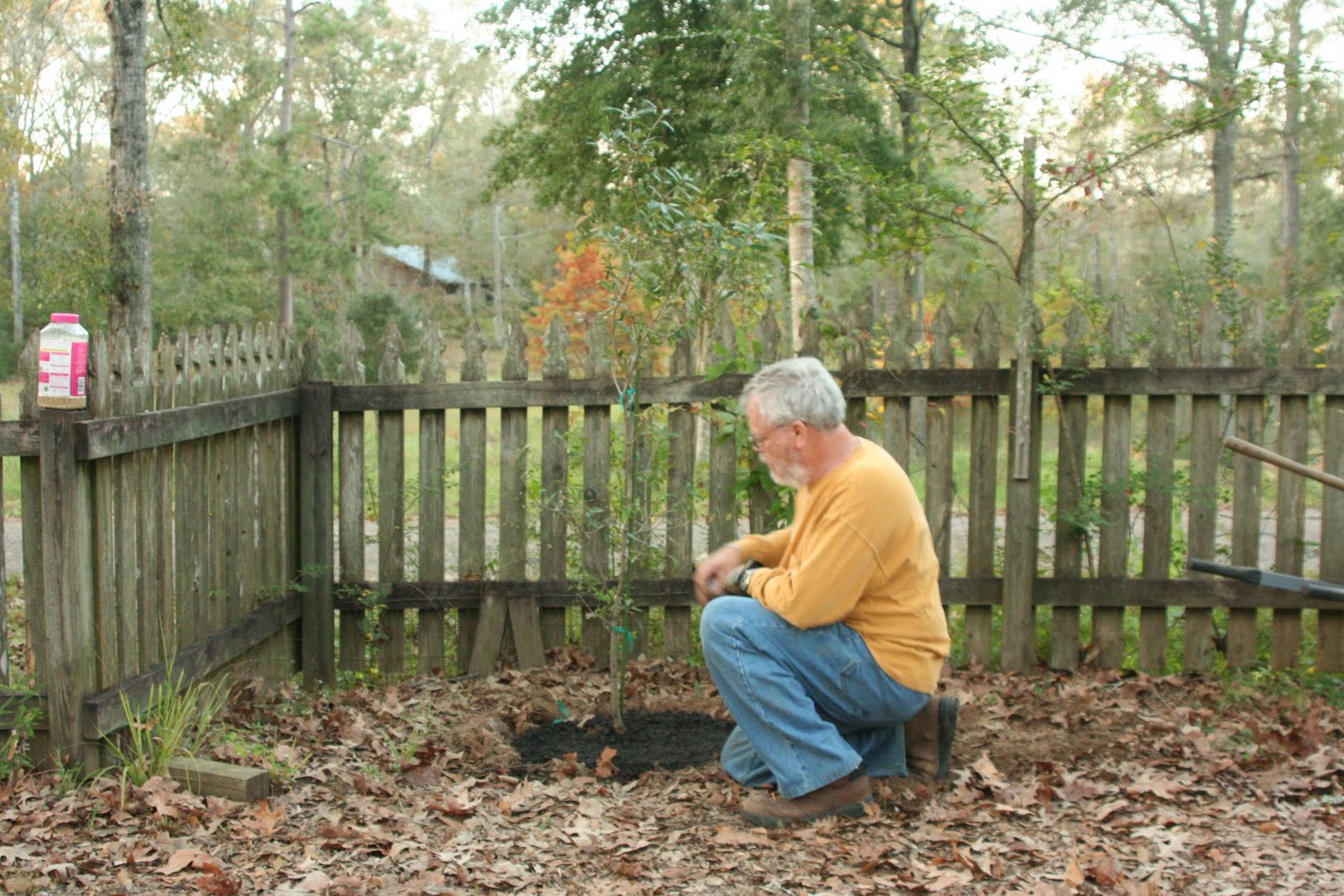
Planting Pablo’s Oak

Pablo is gone now. But before he died, he planted an acorn that has since grown into a small tree. Last weekend, Steve and I took Pablo’s oak up the lake as a memorial to a fondly remembered friend.

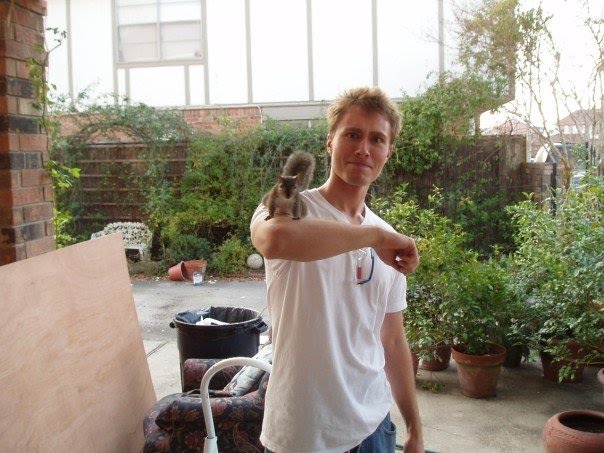
So who was Pablo? Here he is:


No, not the person; that’s Ben, a great guy who gave up part of his 2005 Christmas vacation to come down from Kentucky and help us rebuild after Katrina. Pablo is the squirrel. He brightened our lives through all the dark, heartbreaking months we were struggling to recover from the hurricane.

Katrina’s combination of wind and flood decimated the neighborhood’s squirrel population. The sole survivor was Pablo, a rather small male with the scraggliest tail I’ve ever seen on a squirrel. He was so lonely—and hungry—that he adopted us. Every morning when I’d pull into the driveway to begin another day’s work on our devastated house, he’d come pelting down the walk, chattering happily. There you are, there you are. Launching into a flying leap, he’d land on my shoulder. (He did that once to the UPS guy, who freaked out.)

We kept Pablo supplied with nuts, and in return he made us laugh and helped us to remember what is important in life and what isn’t. After about eight months, a new squirrel appeared, young and plump and female. Together, she and Pablo set to work rebuilding the neighborhood squirrel population. Yet even after he had his own kind again, Pablo stayed our friend.

By the time we moved back into our house, we could tell he was aging. He could no longer make the great leap from the pavement to our shoulders, but would have to climb the brick posts or a tree and chatter for us to come close enough that he could jump. And then one day he came no more, and we knew Pablo was gone.

But he left my yard seeded with lots of little nut trees—pecans and oaks and walnuts. The little oak I found growing in my hanging bougainvillea—one of Pablo’s favorite spots—made me laugh so much that I carefully separated it out and potted it up. I’ve nursed it along for several years now. We selected a spot down by the back fence of our lake house, and last weekend we planted it.


There are lots of squirrels up at the lake. Hopefully, in time, their descendents will enjoy the acorns from Pablo’s oak. And every time we see it, we’ll be reminded of the little friend who helped us through one of the darkest periods of our lives.

Saturday, August 29, 2009

Katrina Plus Four

**

For me, the day before Katrina is the anniversary that always brings a moment’s silent remembrance and reassessment. It was on Sunday that we finished boarding up our house, packed our cars, and drove away from a neighborhood, a city, a life that would never be the same again. It was on Sunday when, trapped in traffic as the feeder bands of the hurricane rolled over us, I looked out over a vista of tens of thousands fleeing for their lives and realized three things with sudden, painful clarity: that I was part of an event that was both frightening and powerfully historic, that my world was about to be turned upside down and inside out, and that I was one of the lucky ones because I was getting out with my family.

It sounds like a selfish focus, concentrated on my own pain, my own experience rather than on the 1,800+ who died. It is not.

I actually started this blog on an earlier Katrina anniversary, when—like the parents of a newborn child—we were still counting the passage of time by months. Curious about how far I’ve come since that day, I went back and reread my first posting, written in my gutted office when we were still working so hard to get back into our house. Here it is…

Saturday was an anniversary of sorts. Eight months ago yesterday, Hurricane Katrina took off the roof of our New Orleans-area house while the floodwaters of Lake Pontchartrain came sluicing through the ground floor. Sometimes I still lay awake at night and torture myself with conjured images of water lapping at my bookcases…swirling around my daughter’s lovely old iron frame piano…leaching the color from the polished wood of ancient chests. The images are always without sound, like glimpses into the eerie, flooded world of Atlantis or the Titanic. And then I think, No, not my house. Reality tilts and never quite rights itself.

Eight months. For eight months we’ve lived the life of refugees, shuttling from one shelter to the next. The possessions Katrina left us are boxed and scattered—at a friend’s house in Baton Rouge and two storage units in two different cities, at my mother’s house and the now-empty house of an aged aunt for whom the horrors of Katrina proved simply too much to bear. My mind is scattered, too. I look at the antique roses in my garden, survivors whose carefully lettered copper labels were carried away by the waters into oblivion. Once, I could have named every bush, told you its heritage and characteristics. Not now. That was another life, another reality.

Imagine a house shattered by wind and water. Now imagine hundreds of thousands of houses standing broken and empty. That is New Orleans. Imagine the army of laborers and carpenters, electricians and plumbers and roofers required to make it all right again. They’re not here. (Where would they live?) And so we either wait, or we take up tools and get to work. With hammer and wrecking bar, we attack sodden walls and mold-covered doorframes. We choke back tears as we drag beloved memories, the pieces of our lives, out to the curb and abandon them there to the sun and the rain. We learn to hang and float Sheetrock, to stomp ceilings, to cut trim and plumb sinks. There is a sense of pride, a strength that comes from rebuilding our own house. I think of my ancestors braving the terrors of immigrant ships to build log cabins in the dark forests of Virginia and Tennessee. Or my other great-grandparents, the ones who belonged to the Clan of the Wolf and lived in tune with the seasons and the pulses of the earth. I wonder if they would be ashamed of me, see me as weak. Crushed and disoriented by one little hurricane. Okay, one big hurricane.

Will we ever be the same again? No. Is that a good thing, or bad? Perhaps it is both. In all these months, I have written little. The people in New York have been understanding, in their way. I put the manuscript for my next book, When Gods Die, in the mail a week before Katrina hit. My editor didn’t bother me with the revisions until January. Perhaps she realized I couldn’t handle it until then. I’m still amazed I did manage to do the revisions. I am now committed to write the next book in the series, Why Mermaids Sing. Once, I was excited about this book. I’m still excited about this book. But doubts crowd in on me. My husband says, You’ve always been like this when you start a book.

Yes, I was. But my books come from my soul, and my soul has shifted.

Monday, May 18, 2009

When Urban Legend Turns Out to Be Fact


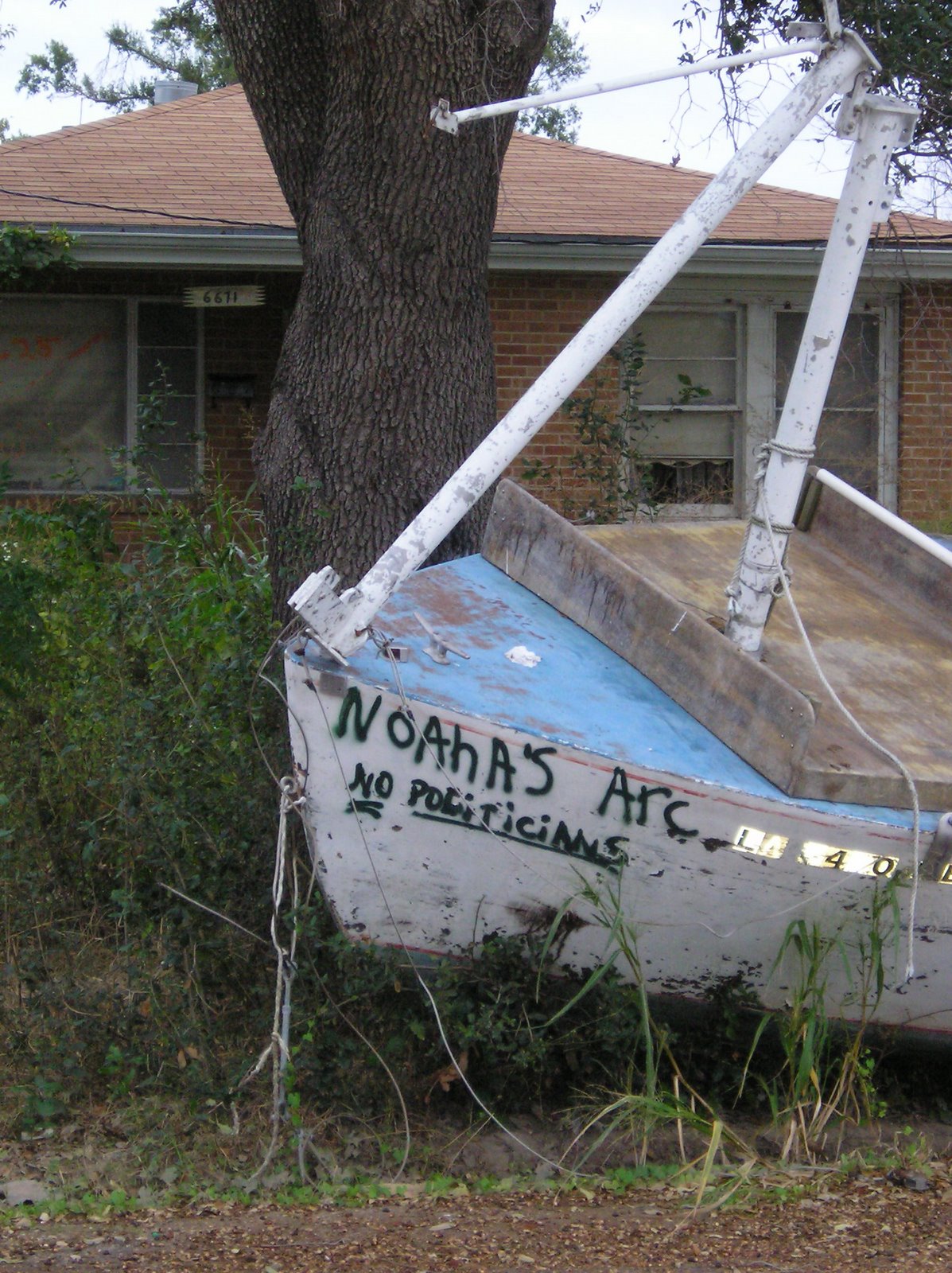
Living here in Katrinaville, we hear all sorts of ugly rumors. About how everyone seems to be sick. About how deaths in our city have skyrocketed even though the population has fallen. About how everyone is on antidepressants. About how in the months after the storm hospitals were dealing with more suicide attempts in a typical 24-hour period than they normally saw in a month. We’ve all been to more funerals in the past four years than most of us have been to in our lives, but up until now our perceptions have all been antidotal; we could tell ourselves maybe it wasn't really as bad as we thought.

Well, now the studies and facts and figures are coming out, and they’re not pretty. Yes, in the nearly four years since Katrina, levels of sickness have indeed risen sharply. Nearly two-thirds of New Orleanians now report chronic health problems, up a staggering 45%. The number suffering from depression has tripled, with suicides still running at double what they were in 2005 (and they’re actually now way DOWN from what they were in the first 12 months after the storm). The city’s population is still at less than 75% of what is was before Katrina. But here’s the scary part: Only 57% of the city’s medical facilities have reopened, and even hospitals that are open are short-staffed.

If this were Burma, or Bangladesh, I could maybe understand it. But for a major American city to be hit with a natural disaster and then essentially abandoned by the federal government is a disgrace. Yes, lots of money flowed in here, but as is typical in such cases, it went to the Shaw Group, and Halliburton, and Blackwater, fattening the balance sheets of Corporate America while the city itself—and its residents—were left to slowly collapse.

And here’s another unpleasant statistic: One in five New Orleans residents now say they are considering leaving the city.

Monday, May 04, 2009

The Last of the Dominoes


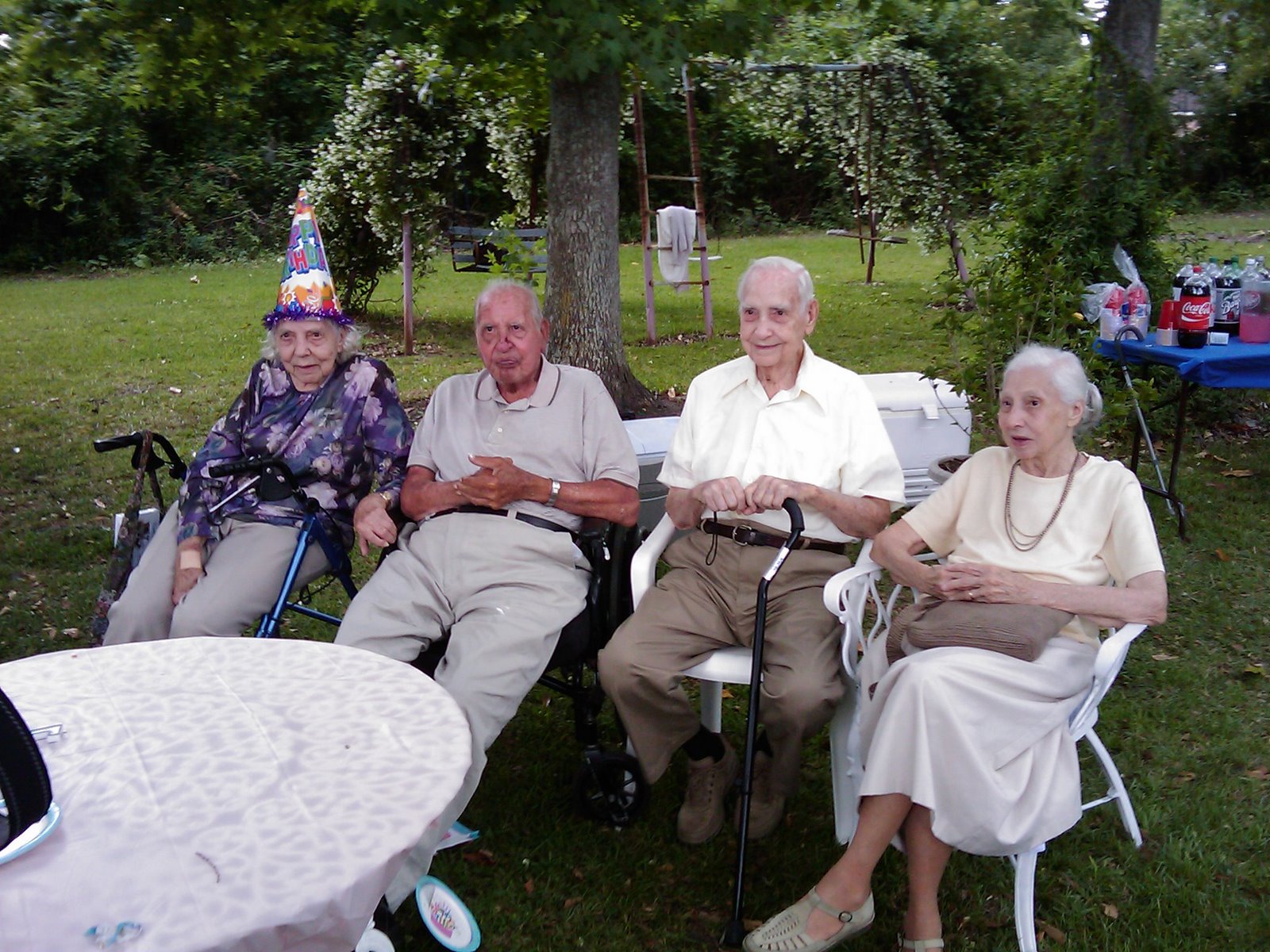
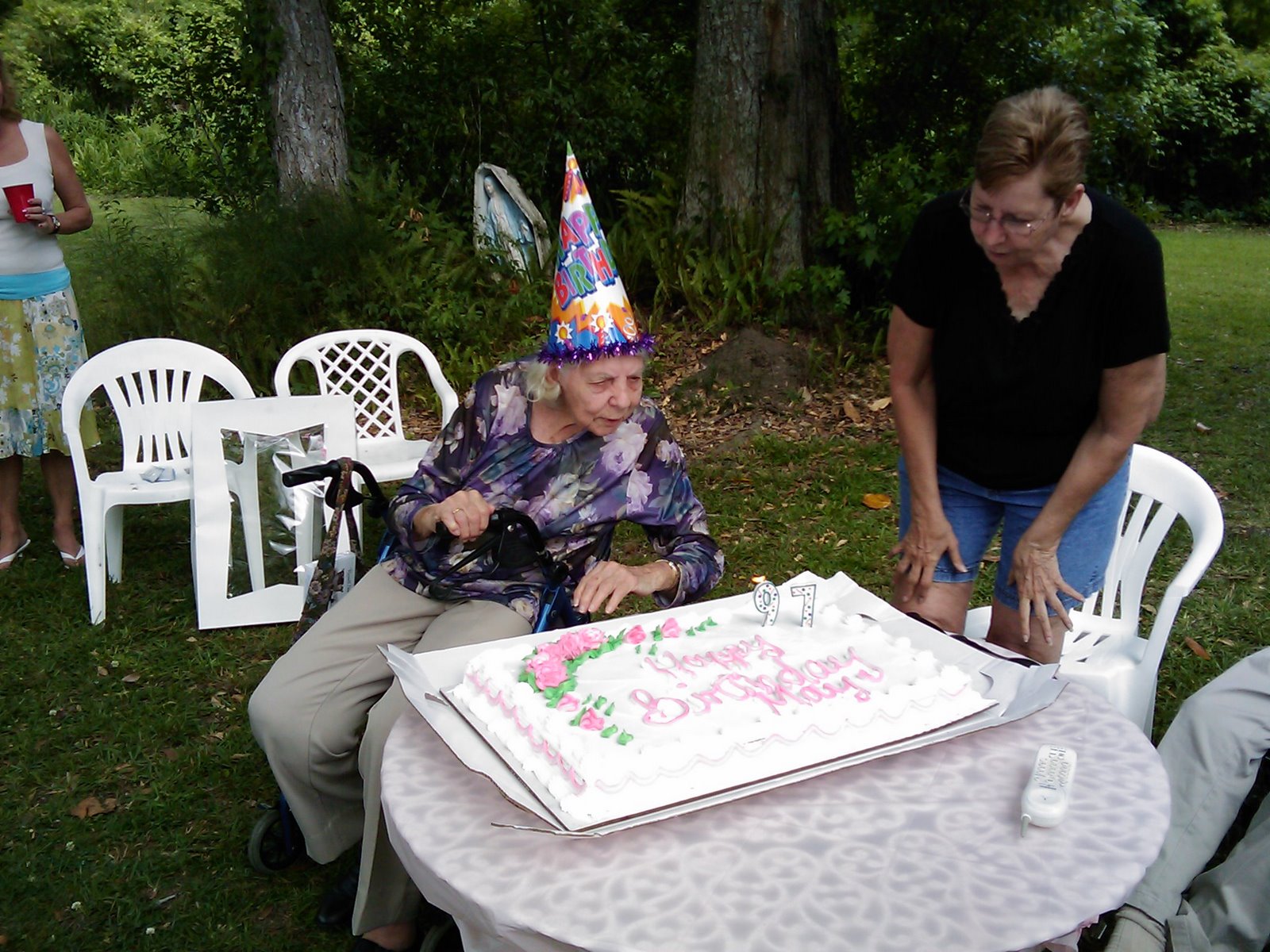
On Sunday, my extended family gave a birthday party for my Aunt May. She’s ninety-seven. Amongst the family members attending were her three surviving siblings, who range in age from my own soon-to-be ninety-two-year-old mother (on the right, in the yellow top and skirt), to the baby of the family, Uncle Jiggs, now eighty-five. My Uncle Al is turning ninety.

My grandparents, Elizabeth and Peter Paul Wegmann, married relatively late in life but still managed to have nine children. My grandmother used to tell the story of how she brought all of her little ones through the flu epidemic of 1919 by lining them up every night and giving each a hot toddy of honey, lemon, and whiskey. All four of her sons went off to fight in World War II, and by some miracle not only survived but all came home, one after the other, on the same day. Of good German stock, my grandmother lived to be ninety. My grandfather died at ninety-two. As they aged, their nine children all seemed to share the same somewhat bizarre conviction that they, in turn, would live to be ninety or ninety-two. Then they would start keeling over, one by one, in order of their birth. Like dominoes. It became such a family joke that we started calling them the Dominoes.

When I moved to New Orleans a few years ago, all nine were still alive. But then, inevitably, the Dominoes started falling. The first to go was my Aunt Helen, the second oldest, who died at the age of ninety. It was quite a shock. She wasn’t supposed to be the first to go. Then came 2005, a horrible year for us, when we buried four in less than 12 months. The eldest, Aunt Henrietta, was 95. But one of the brothers was “only” in his late eighties. My Aunt Clair died, at the age of 93, in the aftermath of Katrina. Since the cemeteries in the city were still under water, we had to bury her in a small town up the river. It was, to say the least, traumatic.

Now there are only four Dominoes. Uncle Al still lives at home, alone since the death of his wife last year, although his sons are trying to talk him into moving into an assisted living complex. He says, “Heck, I don’t need that! I still mow my own lawn.” Uncle Jiggs had a stroke a few years ago, but is well cared for by his wife, who is 25 years his junior. My mother had a stroke after Katrina and now lives with me, although she’s still going strong. Aunt May still works every day in her garden, although she admits she now needs to get her great-grandsons to dig the holes for her. She told me a few years ago that she’s decided she’s going to live to be one hundred.

I suspect she’s going to make it.

Saturday, April 11, 2009

What Really Happens to Heroes

**

I was planning to do a post today about heroes in fiction, but instead I’m going to write about a real-life hero, Dr. Ivor van Heerden.

As deputy director of LSU’s Hurricane Center, van Heerden created a hurricane modeling program that predicted—very accurately, as it turned out—what would happen to the southern Louisiana coast and New Orleans if the area were hit by a major hurricane. Horrified by what he knew was going to happen, van Heerden spent the years before Katrina battling to get everyone from FEMA to the Army Corps of Engineers to listen to him. They laughed at him.

His forecasts predicting massive levee failures and flooding in Eastern New Orleans, St. Bernard Parish, and the Lower Ninth Ward, were published in the Times-Picayune the day before Katrina hit and helped convinced many to flee. He was at his post at the Hurricane Center, sleepless, through the long dreadful hours of Katrina’s landfall. After the collapse of the federal levee system, he was in the city, watching the water sweep away homes and businesses. This a man who, through intelligence, dedication, and hard work, helped save the lives of countless thousands. After the storm, in a white heat of anger, he sat down and wrote a book called, The Storm: What Went Wrong and Why During Hurricane Katrina. It’s a gripping read that will leave you sick and angry and wanting to shake a few people. More than a few people. (I blogged about it when I read it in August of 2006, right after we moved back into our house, here.)

Not only did van Heerden write a book, he also agreed to head the forensic investigation on what went wrong. Dubbed Team Louisiana, this investigation prepared the report The Failure of the New Orleans Levee System During Hurricane Katrina for the Louisiana Department of Transportation and Development. Because of his expertise and the accuracy of his forecasts, he was frequently quoted by various media outlets. Needless to say, his comments were not flattering to the Powers That Be.

So how did LSU treat this hero? In November of 2005, they told him to stop talking to the media because he was hurting the university’s chances of getting federal dollars (not to mention reflecting badly on George Bush, good buddy of the University’s chancellor O’Keefe). And now, under the direction of Louisiana’s new Republican governor, LSU has fired van Heerden. Their reason? None given, not to the press, nor to van Heerden himself.

Risking his job, Van Heerden fought long and hard to get the truth out there, to save lives, to save our city, to save our coast. That’s heroic. Now, he’s paid the price. In popular fiction, he would ultimately triumph as a reward for making the morally “right” choice. But this isn’t fiction; this is life.

Saturday, March 28, 2009

Quack!


Steve and I started feeding the birds and squirrels back in those ugly, traumatic days after Katrina, when the hurricane’s winds had stripped the vegetation from the area’s shrubs and trees, and the receding floodwaters had left neighborhood gardens brown and dead. Now, Steve throws out big scoopfuls of seed and nuts and cracked corn every morning before he leaves for work. Our garden is an oasis of birdsong played out against the splash of the fountains (and the occasional “Meow! I want one of those!” from our gang of fascinated, ever-hopeful inside cats).

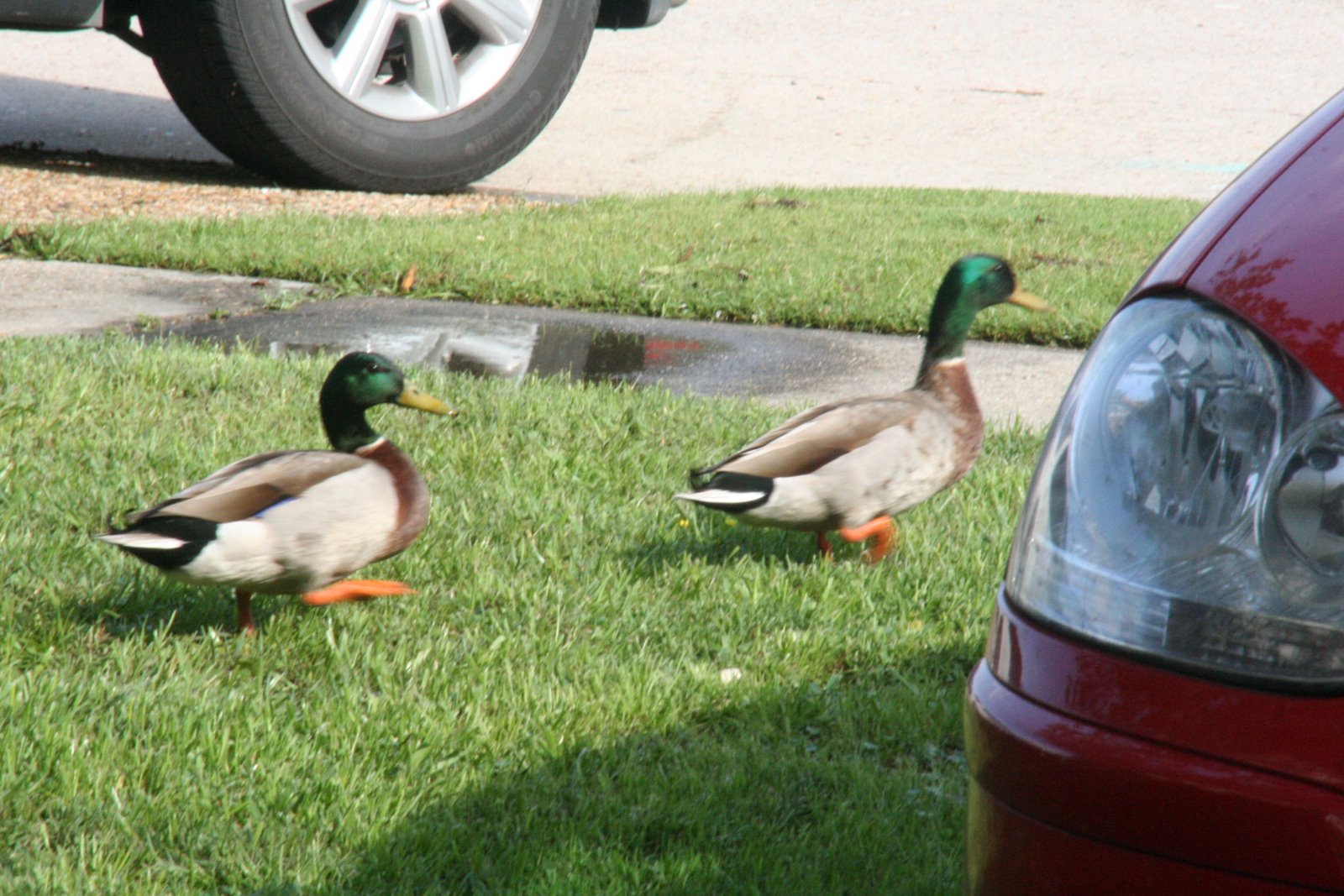
But this is the first time we’ve looked out the window to find ducks in our garden. I guess it shouldn’t have come as a surprise, given that we live only a couple hundred feet from a canal. But it was still enough of a treat to send me scrambling for my camera.


Bye, guys! Ya’all come back now, you hear?

Friday, February 20, 2009

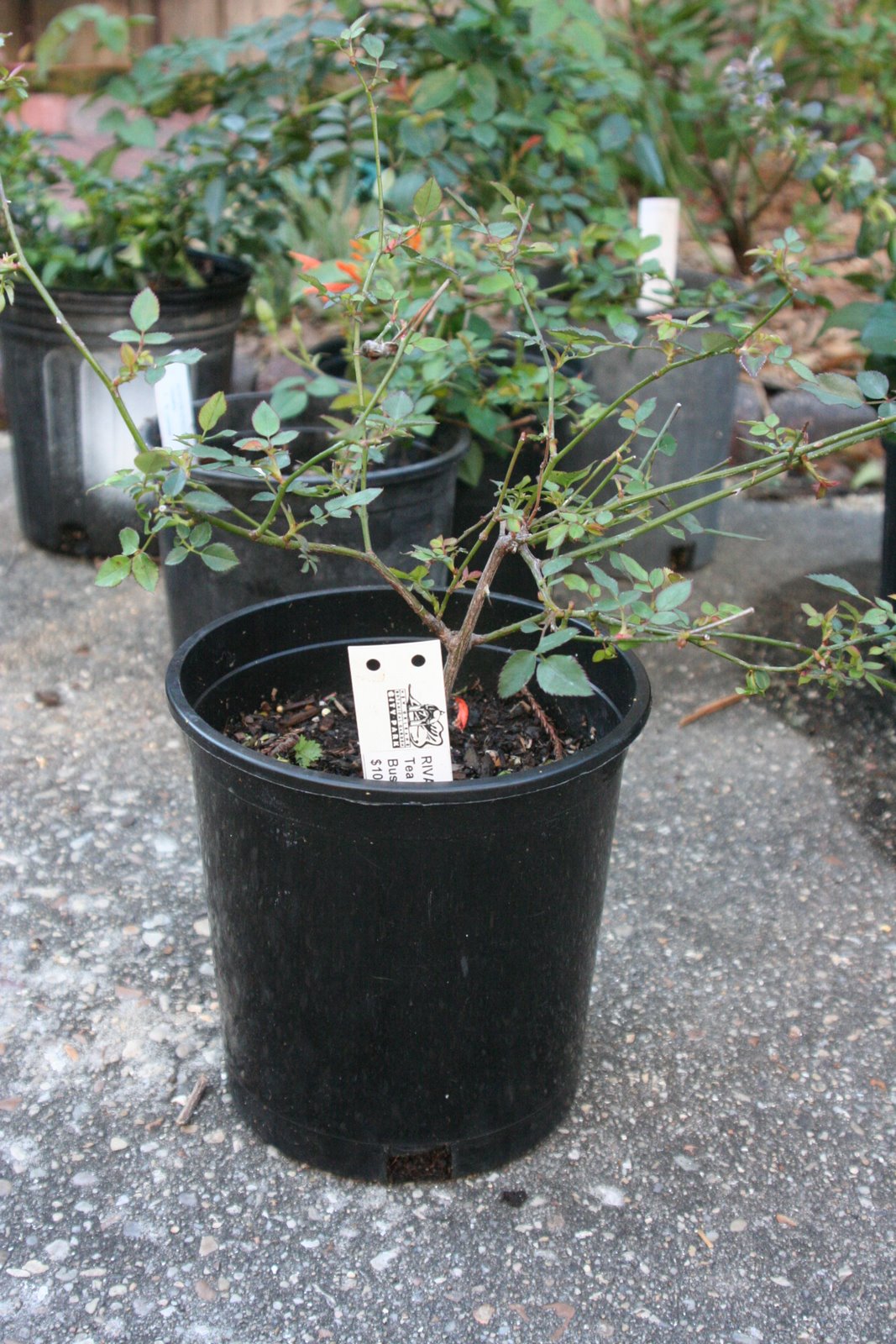
A Car Full of Roses for Valentine’s Day


Steve and I spent the Saturday before Katrina at City Park’s Botanic Gardens Plant Sale. Every couple of months, the volunteers at the Pelican Greenhouse used to help raise money for the park by putting on a sale of old-fashioned plants and roses that do well in New Orleans (not all green things love our heat and humidity). There weren’t a lot of people at the sale that morning, which surprised us until we were driving home up Metairie Road and saw shops with big signs in the window that read, CLOSED FOR HURRICANE. We looked at each other and said, “Hurricane? What hurricane?” (From which you can tell we don’t watch much television and so were oblivious to the fact that the hurricane that was supposed to be heading for Florida had shifted to take aim at us.)

A couple months later, we took time off from working on our gutted house to go look at what the hurricane had done to City Park. We had to drive the long way around to get to the Pelican Greenhouse because there was STILL water sitting in the dip under the railroad tracks. The greenhouse itself was a shattered wreck; the pots of the plants that hadn’t sold that fateful Saturday were strewn about wherever the receding floodwaters had left them. We’d been attending those plant sales regularly since before we were even married; a lot of wonderful memories of good times, sunshine, and laughter were associated with that greenhouse. Steve parked the car and we just sat in silence for a moment, looking at it.

If you’re wondering why I’m blogging about this now, it’s because last Saturday, on Valentine’s Day, City Park had its first Pelican Greenhouse sale since Katrina. It’s taken them a long time to get the greenhouse back up and running, and they’re still trying to replace all their cutting stock. Volunteers were going around the sale asking regulars, “Do you have a Phyllis Byde? You do! Can we have cuttings?”

It’s nice to be able to give back, after all the joy those sales have given me.

Tuesday, August 26, 2008

Katrina Day Number Three and Counting


Friday will mark the third anniversary of the day Hurricane Katrina slammed into the Gulf shore, essentially wiping out the New Orleans we all knew and loved, and altering forever those of us who lived through it. It’s a story the rest of the country has long since grown tired of hearing. But for those of us who still live here, the storm is a part of our lives. It’s become a tradition for a group of us to take a tour of the city, then meet for lunch at a local restaurant before heading over to the home of author Laura Joh Rowland for desert. Laura’s house in Gentilly took about four feet of water on the bottom floor, and she says organizing the annual event means she has something to look forward to on that day, rather than simply dreading the memories the anniversary inevitably brings.

I’m not sure that works for me. But the get-togethers make for a fun day, and since it’s been a while since I’ve driven out to Chalmette and the Ninth Ward, I’m also curious to see how things are progressing down there.

In my own neighborhood, probably one out of every fifteen or so houses is still empty—gutted and abandoned. I often look at those houses when I go for a walk and try to understand what happened to the people who used to live there. Are they dead? Are they someplace else, still paying mortgages on houses they don’t inhabit? Why don’t they sell the houses? Or if the bank has repossessed them, why doesn’t the bank sell the properties? Of course, in the truly devastated neighborhoods, selling probably isn’t an option.

With Hurricane Gustav now taking aim at the Gulf, we're also all reviewing our evacuation plans...which has added a nasty fillip to the looming anniversary.

Sunday, August 17, 2008

Fay and the Faint-hearted

**


It doesn’t help that we’re just days away from the three-year anniversary of Katrina. But the truth is, no one with hurricane-induced posttraumatic stress syndrome should send their youngest child to college in Florida.

Fay isn’t a hurricane yet, but they expect it to turn into one before it comes ashore. The path has been vibrating back and forth across the western coast of Florida, with landfall expected close enough to my daughter’s college that they’re ordering an evacuation. That means they close the campus, and where the students go and how they get there is up to them.

“Keep yourself safe,” I tell my daughter in one of the thousand phone calls I’ve made to Florida in the last 48 hours.

Her response is predictable. “I can’t believe you said that. It’s just a little Category 1. I went through Katrina, remember?”

Like I could possibly have forgotten? I say, “It’s not the hurricane I’m worried about; it’s the evacuation traffic.”

“Oh. I’ll be careful.”

But I lied, of course. I am worried about the evacuation traffic, but I’m also worried about falling trees and rampaging storm surges and roving lawless gangs and all the other nasties that come with hurricanes.

I’m really great at worrying. Unfortunately, from here, it’s all I can do.

Sunday, July 06, 2008

Nightmare, Revisited

We’d planned a nice, relaxing weekend. We’ve been working so hard for what seems like forever—rebuilding from Katrina, renovating our newly acquired lakeside weekend getaway/hurricane evacuation house, sorting through my globetrotting mother’s lifetime accumulation of treasures and reconfiguring our house to get ready to move her in with us—that we decided we deserved a few days off. The idea was to go up to the lake, resist doing any of the zillion and one things that still need doing up there, and instead lounge around, sip root beer and eat (vegetarian) hotdogs at the picnic table overlooking the water, and then mosey down into town for the local Red, White, and Blueberry Festival.

Ah, fate. I pushed open the front door to hear the sound of rushing water. At some time in the past three weeks, the hot water heater sprang a leak. At first, from the looks of things, just a fine spray, at some point it turned into a gushing flood.

It could have been so, so much worse. I seriously suspect the final burst occurred just hours before our arrival, which is what saved the house from total destruction. Thanks to our decision to go up there and “goof off” this weekend, the damage was limited to two rooms—the room where the hot water heater is located, and the dining room. The casualties are a bunch of Steve’s tools (which were stored on the shelves and floor of the former), a dining room chair (already refinished once after Katrina!), an antique buffet already in need of refinishing, and of course the walls of said two rooms.

There’s nothing like ripping out moldy sheetrock and soaked insulation to bring back the bad ol’ days of Katrina and provoke on a dose of posttraumatic stress syndrome. At least we know the drill. After bleaching, we’ll now need to let the studs dry for six weeks before we can start rebuilding. But we did get the Sheetrock we need, and I was incensed to see that it is now selling for less than $6 a sheet, despite the recent Midwest floods. Why incensed? Because my house was rebuilt after Katrina using $12 a sheet drywall. Ya gotta love capitalism.

Wednesday, April 30, 2008

Wow! MERMAIDS Won!


I sooo did not expect this! I've just learned that WHY MERMAIDS SING has won the Best Historical Mystery Reviewers Choice Award from Romantic Times.

I've known for several months that MERMAIDS had been nominated. But it was up against such fierce competition from such well-known writers that I was convinced there was no way it would win. I simply counted it as an honor to be nominated, and forgot about it.

When I remember the conditions under which I wrote this book--as a Katrina refugee devoting most of my time to rebuilding my house--it really seems incredible. The most amazing thing to me is that the book ever made it into print.

Wednesday, March 12, 2008

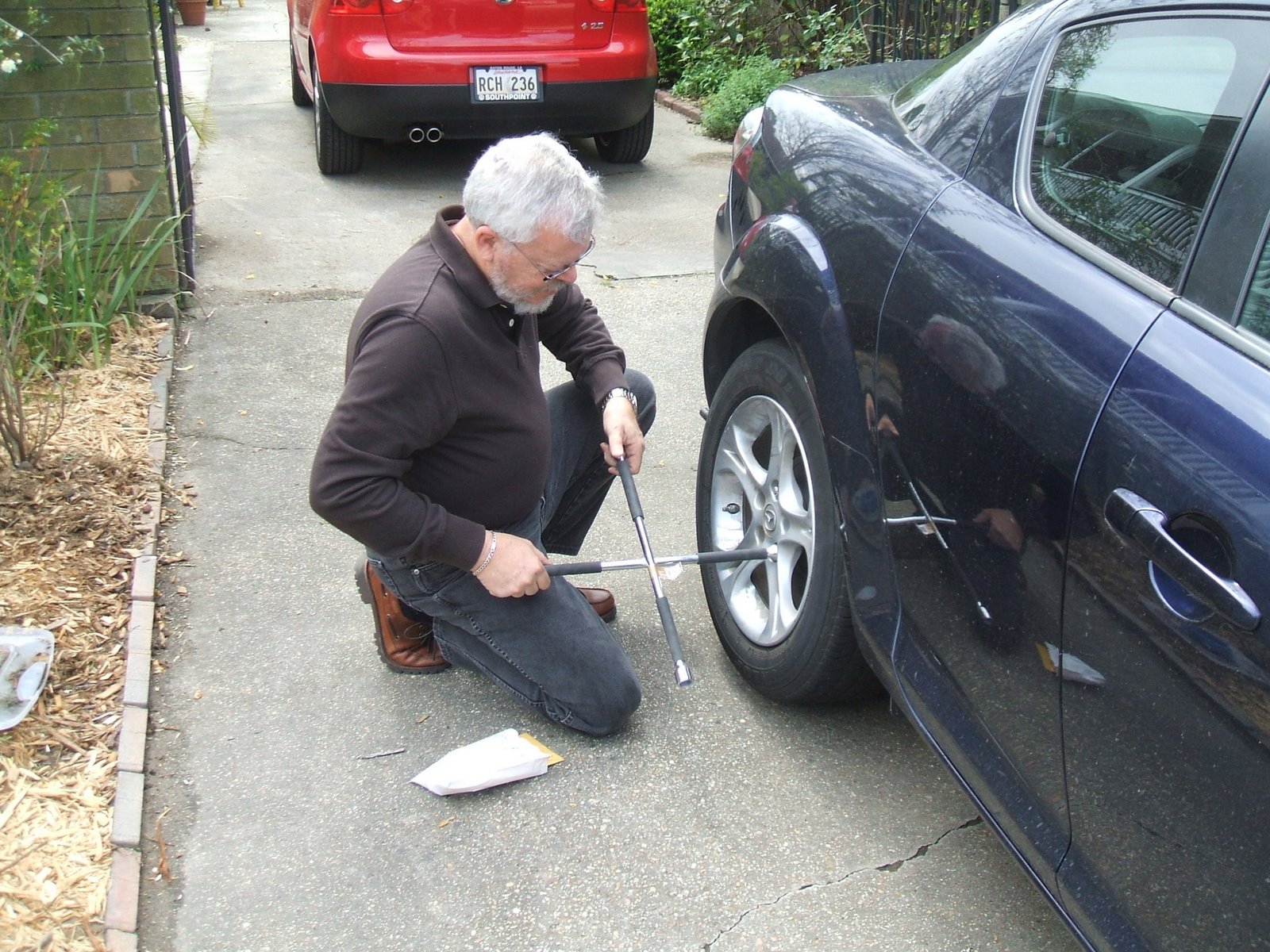
Another &#@$ Flat Tire


Amongst all the horrendous grief, trauma, and expense generated by the failure of the Federal levees during Hurricane Katrina, flat tires obviously rank way, way down there on the misery index. But when it comes to sheer, repetitive aggravation, they can really start to get to you.

Steve and I have had so many flat tires over the last 2 ½ years that I’ve lost count, although as the rebuilding in our own neighborhood progresses, the incidents have lessened. But Sam, who took a year off from Yale Law School to attend premed courses at a local university, just had her third flat in six months.

Her daily commute takes her through Lakeview, which was the scene of the 17th Street levee collapse. Rebuilding the houses and businesses in that area—or demolishing them and starting over—will take years. Sam’s first two flats were caused by roofing nails; the culprit of this latest episode was a drywall screw. Perhaps this is a sign of progress?