Friday, May 29, 2009

Of Heaven and Hell

Once upon a time, a historical mystery writer penned a rather ghoulish tale set in a dark, ancient crypt and strewn with dead priests and mummified corpses and all manner of nasty secrets. She called her tale What Hell Marks, after a favorite Shakespearian quote. She sent if off to her publishing house, along with what she thought was a great suggestion for a cover, including a menacing arch, a worn staircase, a glimpse of the skirt of a woman running away, and a skull.

Her publishing house said, “You know how we talked about doing something to make this series attract more female readers?”

To which our writer nervously replied, “Yes….”

“Well, we think women would be put off by a book with ‘hell’ in the title. So we’re changing it to What Remains of Heaven.”

Our writer attempted to demur, but The Powers That Be prevailed. (Unless your name is Grisham or King, The Powers That Be nearly always prevail.) Our writer was unhappy, but she’s been in this business long enough to know that she needs to roll with the punches. Then the cover arrived. (Cue screams of horror.)

Unfortunately, our writer is prevented by The Powers That Be from showing you this original version. But let me describe it for you: Drift back in time to the 1960s, when Gothics were all the rage. Got that mindset? Good. Now, picture a woman, barefoot, wearing only a white corset and a petticoat (complete with bare shoulders, heaving bosom, and bare back showing through the lacings of the corset) running up dark castle-like steps wrapped in an ethereal light. Think Sarah Jessica Parker in a corset and torn petticoat being chased by a ghost. You may suspect I am exaggerating. Believe me, I wish I were.

Our author takes one look at this cover and nearly swoons. She frantically calls her agent. She emails her publishing house. She is reminded, not so subtly, that her name is not Grisham or King. She is told, “The marketing department LIKES the cover. We said we wanted to do something to make this series appeal more to female readers, remember?” (Cue death knell in the distance.)

Our author weeps. She pleads. She says, “But it looks like a romance! And it is NOT. Don’t you think this cover sends a false message? This book is strewn with dead bodies.” She is told a new cover would be prohibitively EXPENSIVE. She says, “Can you maybe cut the woman off at the waist so all we see is her skirts?” No. “Then at least photoshop it to make the corset and petticoat a color, and get rid of the bareback seen through the lacing and add sleeves so that it looks like a dress? And put shoes on her feet? And get rid of the paranormal-like lighting effects? And maybe add a skull at the base of stairs? And, and…”

After much grumbling, she receives a new version, and a warning: This is it. Like it or lump it. Alas, our author is lumping it (whatever that means), and crossing her fingers that this cover won’t put off every male reader (and non-romance reading female reader) that her series has.

The cover just went up on Amazon, and already our author has received this comment from a reader named Chen: “Is that really the cover? Or is that a "stand-in" until a cover is finalized? 
I'm hoping it's the latter. Otherwise it gives it too much of a "romance novel" feel. I am really enjoying this series and I guess I'd like to see the book have just the right look… I hope that's not the final cover.”

Alas, Chen; that’s the final cover. Believe me, I feel your pain. Times a million. I try to console myself with the thought that at least it's no longer Sarah Jessica Parker in a corset being chased by a ghost.

So, without further ado, here it is:

Tuesday, May 26, 2009

Make Up Your Minds Already!

**

Going over copyedited manuscripts always puts me in a cranky mood. Going over two copyedited manuscripts, one right after the other, when I can hardly think straight thanks to the flu has put me in an ubercranky mood. (So you’ve been warned.)

Now, I’m not one of those writers who see copyeditors as the enemy. I know I do incredibly stupid stuff when I’m writing. When my brain is flying along in creative mode, I write ‘sat’ when I should use ‘set,’ and ‘discrete’ when I should use ‘discreet,’ and a dozen other strange permutations of the English language. A car that is black in one chapter suddenly becomes red. A character named Yates suddenly becomes Yardley. And no matter how many times I go over a manuscript, I still miss those pesky little mistakes. Lots of them. So thank god and publishers for copyeditors.

But there’s nothing like going over two copyedited manuscripts back to back to make you appreciate that this is not an exact science. I feel like screaming, Okay, guys! How about if y’all get together and make up your pedantic little comma-obsessed minds?

Do we say: Now, she knew she was wrong. Or do we say: Now she knew she was wrong.

Because you see, if it’s so important that you guys feel the need to take out a comma—or put it in—then shouldn’t you all agree, especially since you claim to be using the same style guides? Obviously not.

Or here’s another one/Or, here’s another one: What I want to know is, Do I capitalize the D? Or should I say, do I capitalize the d? One copywriter says, no. The other says, Yes. Ghrrr.

And don’t get me started on capitalization. Back in the dark ages when I went to school, if you wrote, “the Secretary of State [as in, Clinton] walked across the room,” the office-as-placeholder-for-the-name was capitalized. But it seems that in the decades since, newspapers discovered that such capitalizations slow down their readers, so they stopped using them. Now (,) everyone (including certain New York publishing houses) is following the newspapers’ lead. The problem with that approach is that if you have a character who is constantly referred to as “the Colonel” or “the General,” then I think it’s less confusing for readers if the old rule is followed. So I have stuck to my guns on this one. But believe me, it’s exhausting. As in parenting, one must pick their battles.

Now (,) you might think I could just jot down some notes about house rules and make the effort to have my next manuscript conform. But apart from the fact that I don’t need one more distraction, these aren’t house rules; these are individual copyeditors’ rules. I looked up previous manuscripts. And you know what? I started sticking those bloody commas in after the “now” and the “once” because a previous copyeditor with the same house insisted they were needed!

So, I give up. Or is that, so I give up? Or should I have said, Or is that, So I give up? Or…

Friday, May 22, 2009

Don’t Go Down in the Basement. Then Again, Maybe…

**

We’ve all had those moments. We’re watching a thriller/horror movie. It’s dark. Evil people/spirits/creatures are aprowl. Our pretty young thing hears a noise down in the basement. Does she go for help? No. Does she run like hell? No. We’re screaming, “You idiot! Don’t go down in the basement!” But does she listen? No. She goes down in the basement.

Why do writers do this? Frequently it’s because they’re lazy. If our heroine calls the police and says, “I think there’s a prowler in my basement,” there goes our writer’s scary/gruesome scene. It’s a lot easier to get an unbelievably stupid character into trouble than a smart one.

That’s not to say that smart characters can’t make mistakes and get into trouble. Everyone makes mistakes, especially when they don’t have all the necessary information or if there’s something in their past that is driving them to make bad choices. Or maybe our character has a choice between a bad alternative and a worse alternative—say, she hears her baby crying down in the basement. Then she has my sympathy and respect when she goes rushing down into trouble. But those kinds of situations are a lot trickier to set up. They’re more work. (And even then some opinionated reader will probably criticize your character for making a poor decision.)

Yet I’m beginning to suspect that there are a lot of readers/viewers out there who don’t actually care if their hero—or at least their heroine—does the equivalent of going down in the basement over and over again. Consider, for instance, a certain megaselling series, which is sort of like Buffy the Vampire Slayer only without the kick-ass heroine (I always thought Buffy’s snap kicks and knife hand blocks were a big part of her appeal, but then, what do I know?). Rather than dispatching her enemies with Tae Kwon Do and a stake and a humorous quip, the heroine of this megaseller goes down in the basement over and over again, largely so that she can be rescued by her hero. I don’t think this is an example of lazy writing. This is deliberate. In a sense, it’s a retreat to an earlier age, where the damsel was in distress and the hero saved the day. And readers love it. One out of five books sold in the United States in the first quarter of this year were by this author.

One might actually deduce that its heroine’s propensity to go down in the basement is an important part of this series’ appeal. Is that true? I don’t know. If you’re a fan of this series, please don’t think I’m criticizing it, because I’m not. This author has obviously tapped into something huge here. I’m just trying to understand it.

Monday, May 18, 2009

When Urban Legend Turns Out to Be Fact


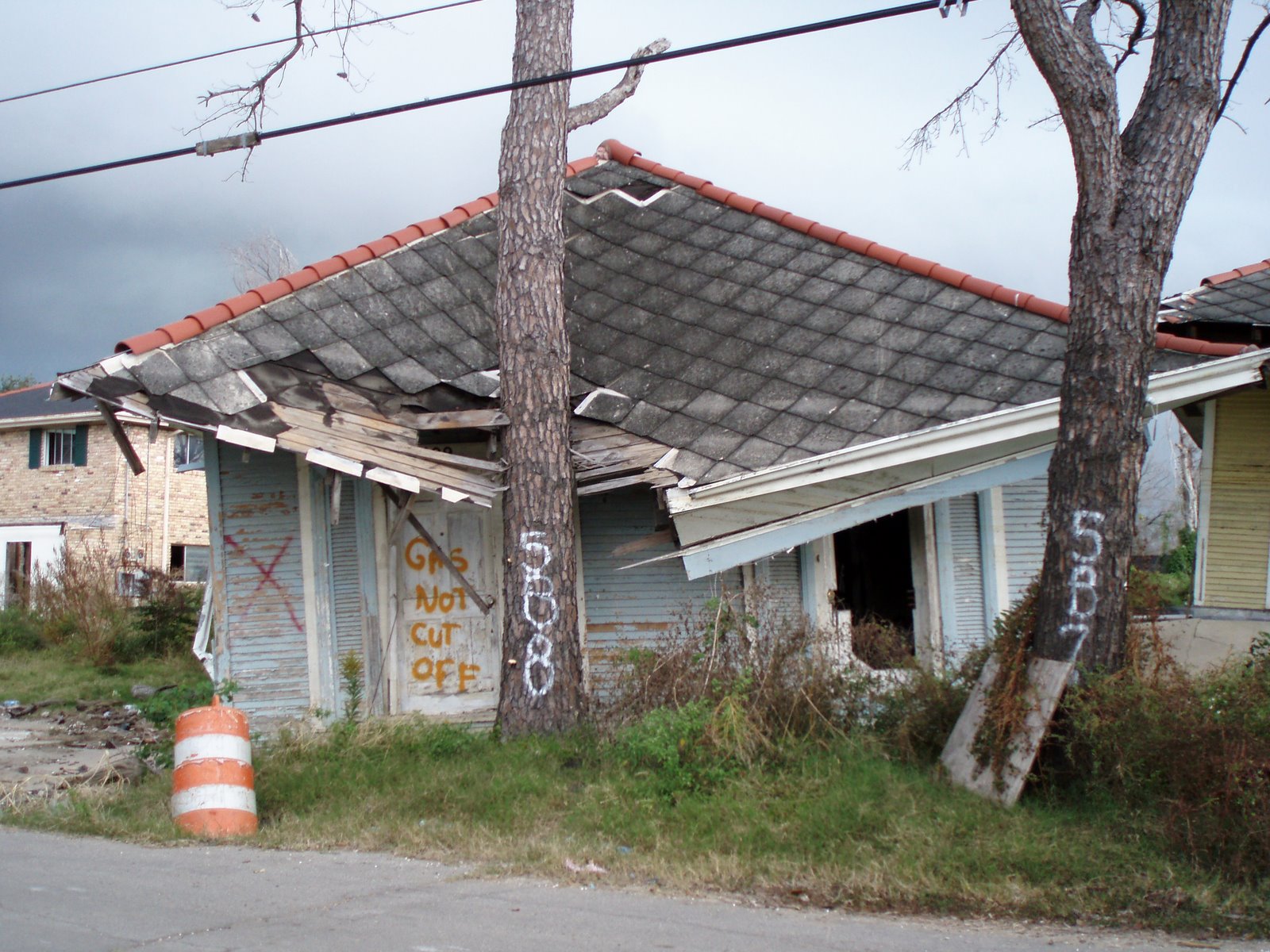
Living here in Katrinaville, we hear all sorts of ugly rumors. About how everyone seems to be sick. About how deaths in our city have skyrocketed even though the population has fallen. About how everyone is on antidepressants. About how in the months after the storm hospitals were dealing with more suicide attempts in a typical 24-hour period than they normally saw in a month. We’ve all been to more funerals in the past four years than most of us have been to in our lives, but up until now our perceptions have all been antidotal; we could tell ourselves maybe it wasn't really as bad as we thought.

Well, now the studies and facts and figures are coming out, and they’re not pretty. Yes, in the nearly four years since Katrina, levels of sickness have indeed risen sharply. Nearly two-thirds of New Orleanians now report chronic health problems, up a staggering 45%. The number suffering from depression has tripled, with suicides still running at double what they were in 2005 (and they’re actually now way DOWN from what they were in the first 12 months after the storm). The city’s population is still at less than 75% of what is was before Katrina. But here’s the scary part: Only 57% of the city’s medical facilities have reopened, and even hospitals that are open are short-staffed.

If this were Burma, or Bangladesh, I could maybe understand it. But for a major American city to be hit with a natural disaster and then essentially abandoned by the federal government is a disgrace. Yes, lots of money flowed in here, but as is typical in such cases, it went to the Shaw Group, and Halliburton, and Blackwater, fattening the balance sheets of Corporate America while the city itself—and its residents—were left to slowly collapse.

And here’s another unpleasant statistic: One in five New Orleans residents now say they are considering leaving the city.

Tuesday, May 12, 2009

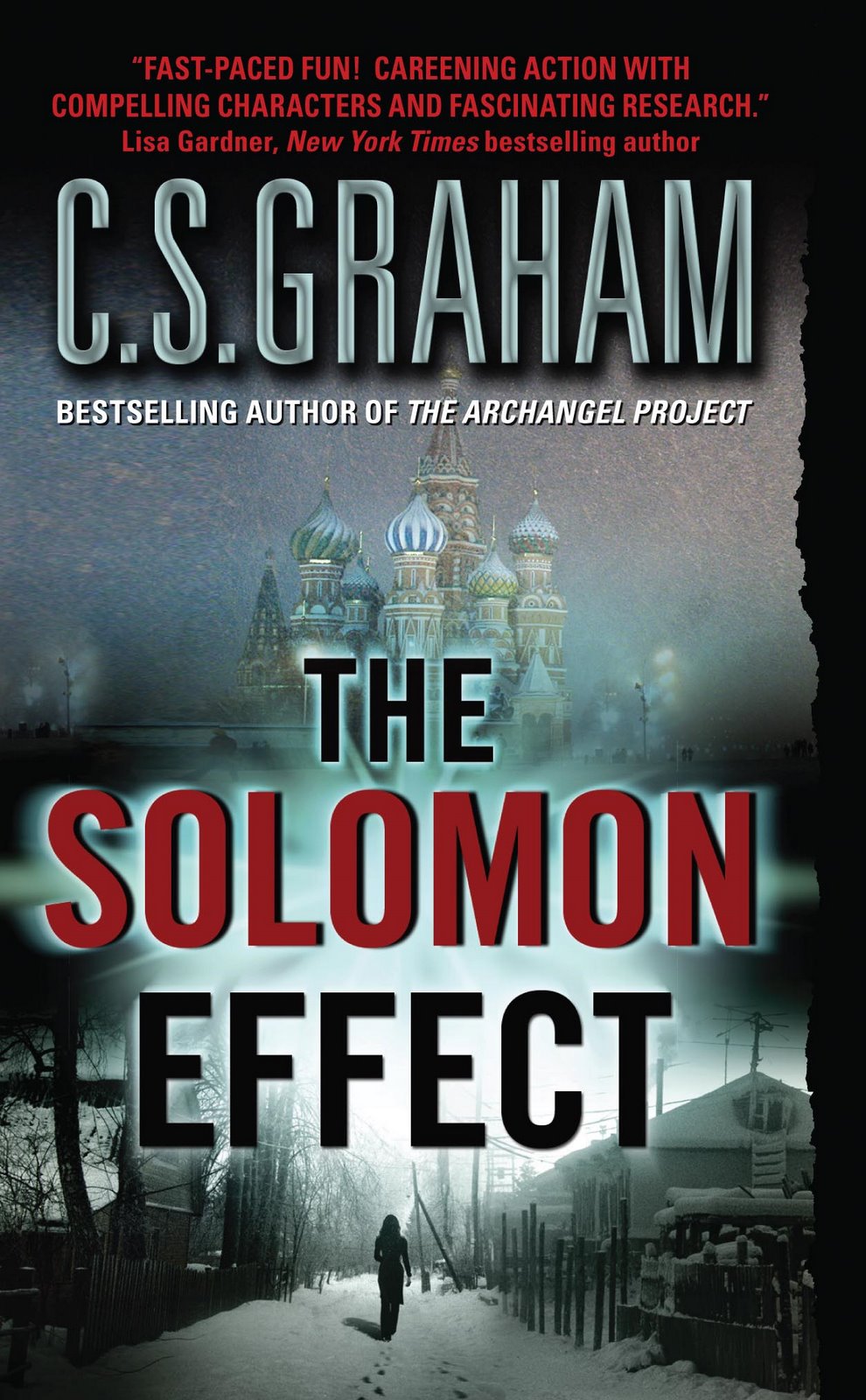
The Cover of The Solomon Effect Makes Its Debut

The cover of the next C. S. Graham thriller, The Solomon Effect, has now been authorized for official release, so here (drum roll) it is…


This is the book that was once named The Deadlight Connection. The editors and marketing department both liked the original title, and it was used for the “teaser chapters” at the back of The Archangel Project. But when it came time to cover conference the book, the art department “couldn’t get their heads around” the original title. It’s the first instance I know of a book retitled in this way. But after months of going back and forth, I finally came up with a new title that everyone liked. All it took was a couple of little rewrites and it, ahem, even fit the book.

I’ve reached the point that I actually like the new title better than the original. What do you think of the cover? I think it's striking, but you can be honest--I’m not the one who designed it!